
🏭 Leasehold vs Freehold Food Factories in Singapore: Which Should You Buy?

Updated: Dec 6, 2025
“A common question often asked is whether buying a leasehold food factory is better, given that the leasehold price is usually more attractive compared to a freehold. Let me break it down with a full analysis to highlight the key points.”

Supply and Demand
Before we dive further, let’s take a closer look at the current market supply and demand situation. Generally, demand for food factories comes from cold storage, central kitchens, food processing, and catering businesses. This demand has been strengthening since the COVID-19 period in 2021, transaction volumes rose from $122 million in 2021 to $192 million in 2022 ( only for your reference).
However, supply remains constrained as zoning for food factories is far more limited compared to other industrial uses. As a result, demand is strong while supply stays only moderate.
In conclusion, when supply is lower than demand, property prices tend to remain resilient. However, there are still many other factors that can influence prices, which we will discuss later.
Government Initiatives: Singapore's "30-by-30" initiative, aiming to produce 30% of food locally by 2030, is expected to drive demand for food manufacturing spaces.
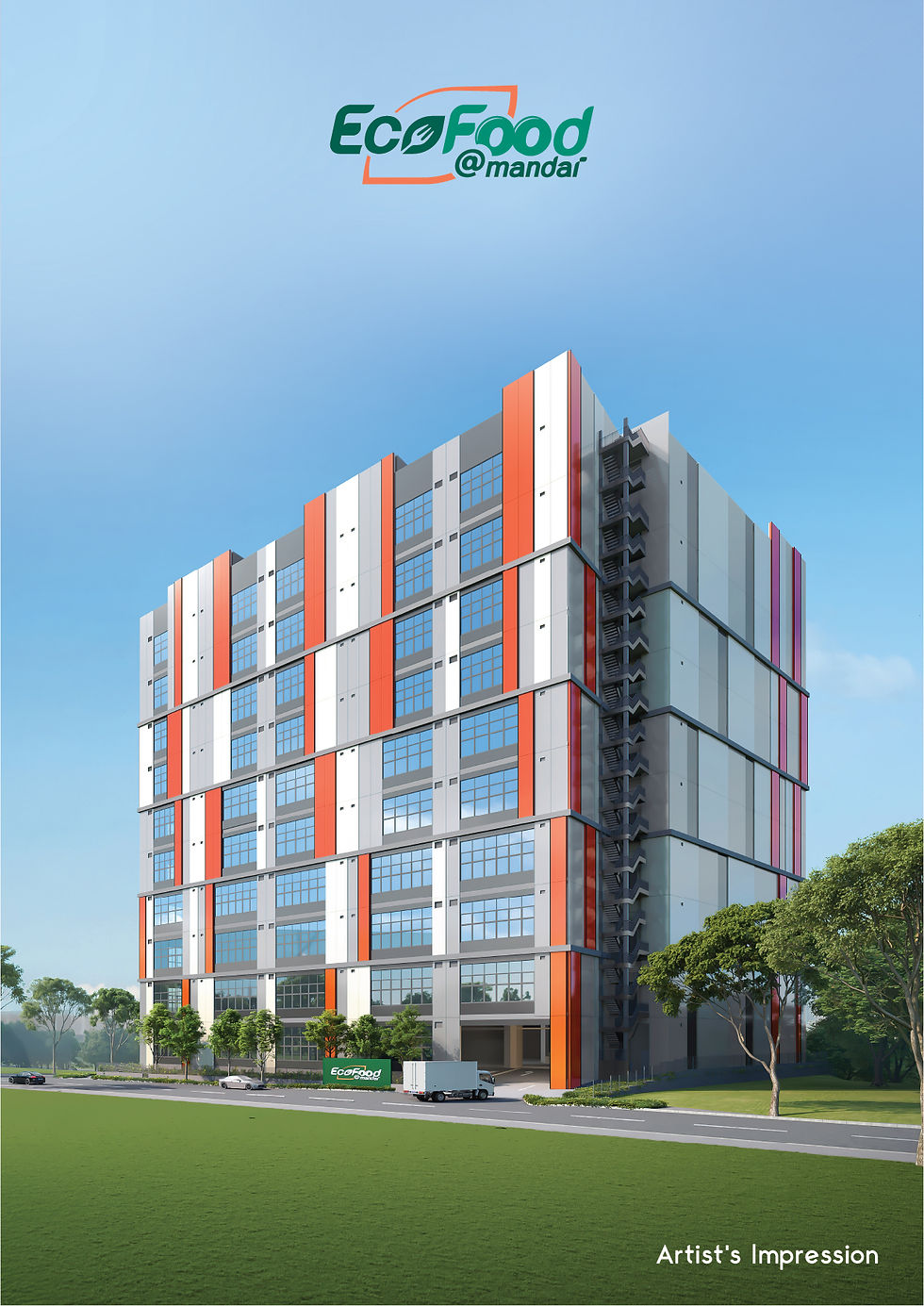
Should buy a food factory or simply lease it? Let’s explore which option makes more sense.
Description | Buying a Food Factory | Leasing a Food Factory |
Upfront Cost | High – Down payment, stamp duty, renovation costs | Low – Usually 1–3 months’ rent deposit + fit-out |
Monthly Outflow | Loan repayment (can be lower than rent in long run) | Rental payments (subject to landlord increases) |
Asset Value | Builds equity, potential capital appreciation | No ownership, rent is sunk cost |
Renovation Freedom | Full control – customise to business needs | Limited – subject to landlord approval |
Long-Term Benefit | Wealth building, stability in cost | Preserves cash flow, lower commitment |
Risk | Long-term commitment, tied to business stability | Possibility of eviction if landlord sells or ends lease |
In conclusion, purchasing a food factory is generally more suitable for established businesses with sufficient capital and long-term operational plans. On the other hand, leasing is often a better fit for startups, expanding businesses, or those experimenting with new concepts.
Beyond this, an important question remains: does owning the property offer greater potential for capital appreciation compared to renting?

Does owning the property offer greater potential for capital appreciation compared to renting? Lets do a financial calculation to explore further
Base on the Freehold food factory buy vs renting comparison :
Property type: Freehold food factory
Size: 1800 sqft
Purchase price: $3,000,000
Interest rate: 1.9% per year (assume fixed for simplicity)
Loan tenure: 30 years
Assumptions: 75% Loan-to-Value (LTV), 25% down payment, 3% annual property appreciation
Rental base on $3 PSF not yet consider the yearly rental increment
Category | Buying (Freehold) | Renting |
Upfront Cost | $600,000 (20% down payment) | $16,800 (3 months deposit) |
Loan Amount | $2,400,000 | N/A |
Monthly Payment | ~$8,817 (principal + interest) | $5,600 |
Total Payment (30 yrs) | ~$3,174,000 (loan + interest) | ~$2,016,000 |
Total Interest Paid | ~$774,000 | N/A |
Equity/Ownership | Own property after 30 yrs | None |
Estimated Property Value After 30 yrs | ~$5,430,000 (assuming 2% annual appreciation) | N/A |
( The calculation is base on estimation only for reference )
In conclusion, the key advantage of buying is equity and potential appreciation. After 30 years, the property is fully owned and estimated to be worth around $5.43 million (assuming 2% annual appreciation). In contrast, renting provides no ownership or long-term asset accumulation. ( Annual appreciation is base on Freehold property estimation for your reference only )
In summary:
Buying: Higher upfront cost, but offers strong long-term value through ownership and appreciation. A freehold property provides steady rental income without lease expiry concerns, while still benefiting from capital appreciation.
Renting: Lower upfront and monthly costs, but no asset accumulation or equity growth. There is also the risk of the landlord selling the property, high relocation expenses, and recurring yearly rental increases as common concerns.
For businesses looking for long-term wealth accumulation and the potential benefits of property appreciation, buying is generally the better financial strategy. Renting may be suitable for those prioritising short-term flexibility or avoiding large upfront commitments.
We now have a clearer understanding that buying a food factory generally offers higher potential compared to renting. However, the question remains: should you opt for a leasehold or freehold property? Which is the better choice, and what are the pros and cons of each?

Freehold vs Leasehold food factory which is a better investment?
Previously, leasehold food factory buildings were typically approved for 99-year or 60-year leases. However, new launches today are granted a maximum of only 30 years. The advantage is that prices are generally lower compared to those with longer 60-year leases. On the downside, the shorter the lease, the faster the property value tends to depreciate. Does it still worth while to buy a leasehold property with only balance 30 years or less ?
Freehold vs Leasehold Comparison :
Factor | Freehold Food Factory | Leasehold Food Factory (e.g., 30/60 years) |
Tenure | Ownership in perpetuity (no expiry) | Fixed tenure (commonly 30–60 years); reverts to state upon expiry |
Upfront Price | Higher purchase price per sqft | Lower purchase price per sqft |
Financing | Easier for banks to finance; higher LTV | Shorter loan tenure; banks may reduce LTV for short leases |
Monthly Repayment | Higher due to larger loan amount | Lower due to smaller loan amount |
Value Retention | Strong — retains value over long term | Declines as lease shortens, especially <30 years |
Resale Market | Strong demand from investors & businesses | Smaller pool of buyers, resale harder as lease runs down |
Capital Appreciation | Higher long-term appreciation potential | Limited appreciation due to lease decay |
Rental Yield | Lower yield % (due to higher price), but steady | Higher yield % (lower entry cost), but short-lived |
Best For | Long-term investors looking for wealth preservation and legacy asset | Businesses seeking lower upfront costs, or investors looking for shorter-term rental income |
Risk | Lower risk, long-term value is preserved | Higher risk, value diminishes with time |
In general, whether newly launched or resale, leasehold properties with 30 years or less remaining are harder to resell, mainly because bank financing is more difficult to obtain and loan-to-value ratios are lower.
By contrast, residential properties with 99-year leases remain attractive investments due to their longer tenure. For industrial properties, it is best to purchase those with at least 50 years of lease remaining, as values tend to depreciate much faster once they fall below this threshold."
Rough guideline for 30-year leasehold industrial property :
Year 1–10: Value may fall only 1–2% per year (due to strong utility).
Year 11–20: Closer to 3–4% per year.
Year 21–30: Can drop 5%+ per year, especially as financing dries up.
Year | Remaining Lease | Value (% of Original) |
0 | 30 yrs | 100% |
10 | 20 yrs | 67% |
20 | 10 yrs | 33% |
30 | 0 yrs | 0% |
( Information is only for your reference )
Leasehold - Properties with less than 30 years remaining are generally more suitable for businesses with budgets that do not require a long operating horizon. However, for businesses planning to operate beyond 20 years, it is advisable to invest in leaseholds with more than 50 years remaining.
Freehold - Similar to residential properties, freehold food factories remain highly sought after as a secure investment, despite the higher upfront cost. This is especially true given the very limited supply of freehold industrial land, the annual capital appreciation for freehold food factories in Singapore typically ranges between 3% and 5%, depending on location, property features, and market conditions.
In conclusion, Both leasehold and freehold food factories come with their own pros and cons. For businesses seeking long-term security and wealth preservation, freehold is the ideal choice. Leasehold options require a lower upfront investment, but the main challenge lies in depreciation over time.
Feel free to WhatsApp me or Contact me for any enquiries on buying, selling, or leasing food factories, or if you have any questions." You can send
You might also like to learn more about the 4 FREEHOLD new launches food factory and arrange for a viewing appointment.
Project | Location | Size From | From $PSF | TOP |
Machperson | 1,800sqft | $1,700 PSF | Dec 2028 | |
Mandai | 1,700sqft | $1,400 PSF | Dec 2027 | |
Mandai | 1,800 sqft | TBA | Sep 2027 | |
Mandai | 1,700 sqft | $1,400 PSF | Dec 2026 |
“A good investment delivers higher returns with minimal capital outlay.”


