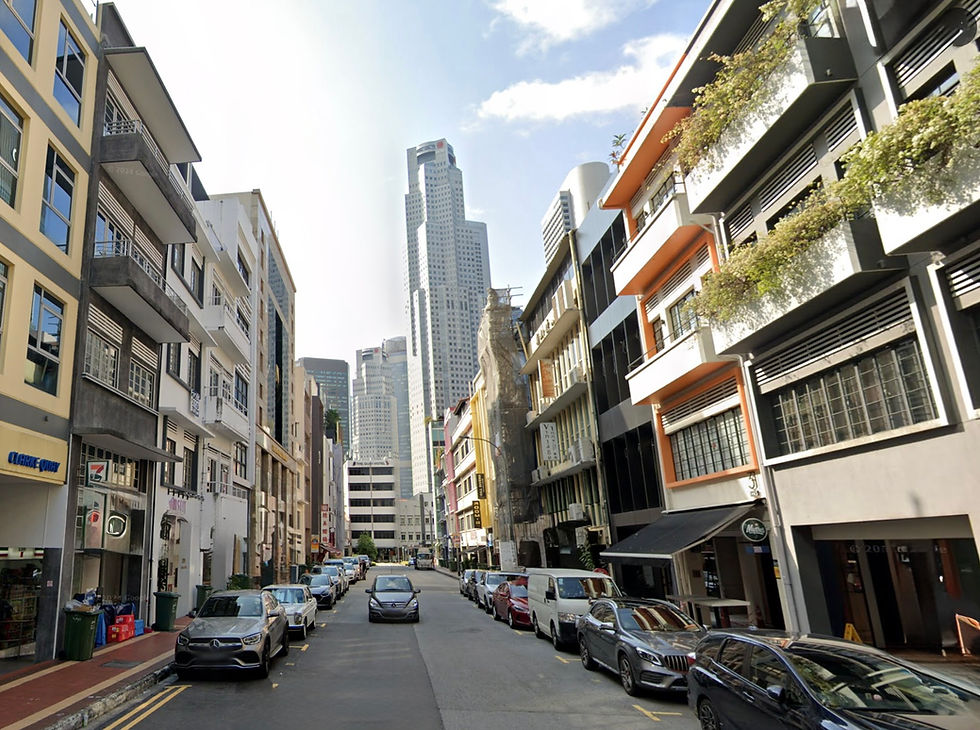
🏘️ 5 Key Factors to Consider Before Buying a Conservation Shophouse in Singapore
- Vincent Ow

- Jun 1, 2025
- 4 min read
Updated: Jun 15, 2025
Conservation shophouses are among the most sought-after real estate assets in Singapore, blending heritage charm with strong investment potential. But before diving into this niche market, it’s essential to understand what makes a conservation shophouse a worthy (or risky) investment. Below are five key factors every buyer should consider before making a move.

1. 💰 Budget & Financing
Conservation shophouses are premium properties — and they come with a premium price tag. Prices can vary widely depending on district, tenure (freehold or leasehold), zoning, and condition. Buyers need to:
Set a clear personal budget before starting your search, as shophouses in the CBD districts typically command a premium. It's advisable to focus on options that align with your financial limits to ensure a realistic and sustainable investment.
Understand whether the upper floors are zoned residential or commercial, as this affects ABSD (Additional Buyer’s Stamp Duty)
Secure your financing early, as some banks are selective when it comes to valuing and approving loans for shophouses. It's advisable to obtain a clear indication of your maximum loan eligibility based on your financial standing.
If you're a foreign buyer or purchasing through a company, expect additional taxes if there is a residential component.
2. 📍 Location, Location, Location
Just like any property investment, location is everything. Prime districts such as Districts 1, 2, and 7 have seen high demand and strong appreciation. But with rising prices, savvy investors are also exploring emerging districts like 12, 14, and 15, where prices are more affordable and growth potential remains.
Key considerations:
Foot traffic (for commercial use)
Accessibility and public transport
URA master plan and future developments
Area’s rental demand and business activity
3. 🏛️ Type of Shophouse
Not all shophouses fall under URA’s conservation zoning. Some are freehold properties without conservation status, but that doesn't make them any less attractive. As long as the property is freehold and located in an area with strong foot traffic and demand, it remains a worthwhile investment to consider. what to look out for:
Conservation Status: Is it part of URA's conservation list? This comes with renovation restrictions but also prestige and long-term value. Identify the shophouses is it a conservation or non-conservation zoning.
Zoning: Understanding the zoning classification—whether Commercial, Residential, Mixed-Use, or a combination of Residential and Commercial—is essential, as it impacts taxes, usage flexibility, and potential for future conversion. Any purchase involving a residential component will be subject to ABSD, regardless of whether you're a local or foreign buyer. (Stay tuned for my upcoming blog where I’ll cover this topic in more detail )
Freehold vs Leasehold: Freehold shophouses offer better long-term value and flexibility.(Stay tuned for my upcoming blog where I’ll cover this topic in more detail )
Also, evaluate the building's condition — major renovations in conservation buildings require URA approval and can be costly.
4. 📈 Rental Yield Potential
One of the major attractions of shophouses is their dual-income potential — especially those with commercial space on the ground floor and residential or office space above.
Questions to ask:
Is the unit tenanted?
What's the rental rate per square foot in the area?
Are there nearby competing units?
Districts with high tourist traffic, dining scenes, or startup offices often command higher rents, especially in locations like Duxton, Telok Ayer, or Kampong Glam.
5. 💹 Capital Appreciation
A common question among buyers is: What will my shophouse be worth in 5 or 10 years? While shophouses are generally strong mid- to long-term investment assets offering stable rental returns, factors such as location and upcoming changes in the URA Master Plan play a critical role in determining future capital appreciation.
Conservation shophouses are in limited supply, particularly in prime districts. With growing demand from high-net-worth individuals and family offices, values have consistently trended upward, buying of District 1 or 2 often command a premium. Notably, recent transactions in District 1 have exceeded $12,000 psf (based on land area), reflecting strong long-term potential. In general, when demand outpaces supply, it signals a solid investment opportunity worth considering. (Stay tuned for my upcoming blog where I’ll cover this topic in more detail )
To maximise appreciation:
Buy in growth corridors or undervalued districts
Look for properties with strong heritage character or corner frontage
Understand URA’s conservation boundaries and long-term plans
Final Thoughts
Investing in a conservation shophouse is more than just buying property — it's acquiring a piece of Singapore’s history while unlocking premium returns. But to succeed, buyers must be well-informed, strategic, and clear about their objectives.
By understanding your budget, identifying the right location and shophouse type, and analysing both rental yield and capital growth potential, you'll be in a strong position to make a smart, future-proof investment.
Ready to Explore Conservation Shophouse Investment?
Unlike any other property investment, navigating the shophouse market takes expertise — from understanding zoning laws to how the performance of which district and selecting high-growth districts
Subscribe To Our Newsletter - Gain valuable insights and data-backed analysis to deepen your understanding of shophouse investments. With over a decade of experience, I help owners market their shophouses and guide buyers and investors in securing the right property to meet their goals and budget. Feel free to reach out with any questions or enquiries.